Insulators should possess sufficient insulation and mechanical strength. During operation, they must withstand not only working voltage and overvoltage, but also adequate resistance to chemical corrosion and the effects of temperature changes and the surrounding environment.
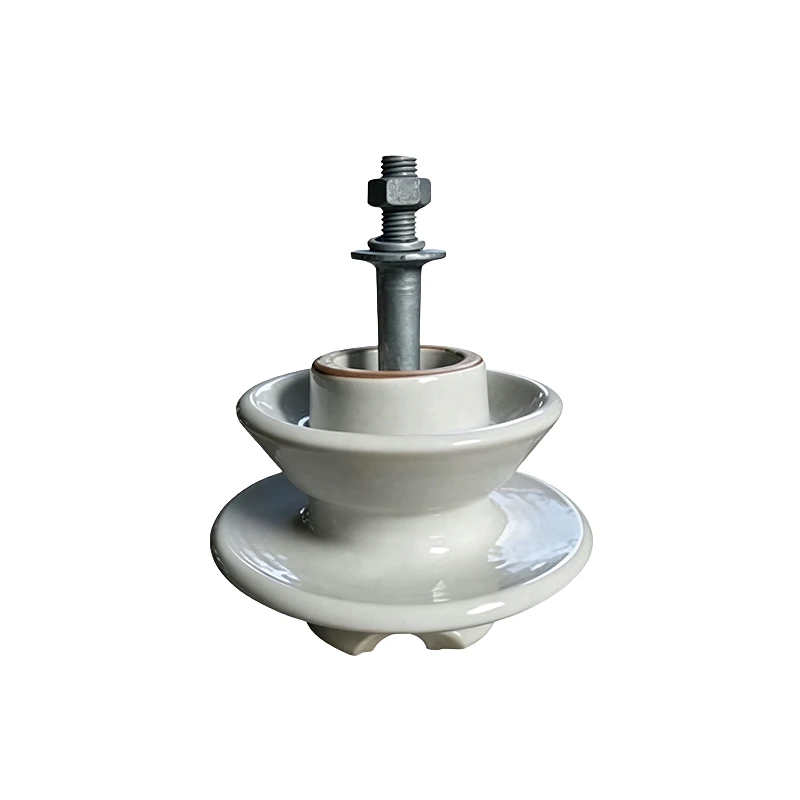
In pin-type ordinary ceramic insulators, the porcelain component and cast steel are glued together with cement adhesive. The surface of the porcelain component is coated with a layer of glaze to improve the insulator's insulation performance. A moisture-proof agent is applied to the adhesive surface at the joint between the cast steel and the porcelain component.
The main reason overhead lines are susceptible to lightning strikes and flashovers due to pollution is that the pin-type insulators become contaminated and absorb moisture during rain, reducing their insulation level and leading to flashover and breakdown, causing line faults.
Even after developing cracks or severe damage, pin-type ordinary ceramic insulators can sometimes continue to operate in clear weather; however, in light rain or heavy fog, the insulation drops sharply, triggering line faults.
In addition, when a pin-type ordinary ceramic insulator develops a slight crack, it is difficult for line inspectors to detect the defect even with binoculars, which leaves a safety hazard for the line and increases the unsafe factors in line operation.