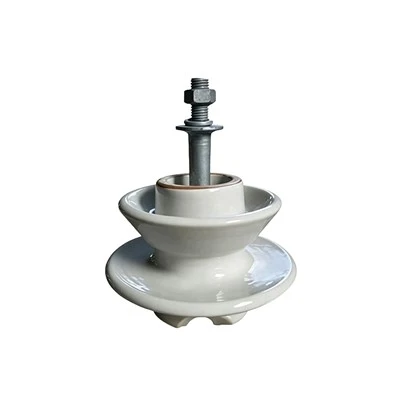
Hey everyone, as someone who’s been in the line post insulator game for over a decade—helping power grids, solar farms, and industrial facilities keep the lights on—one question pops up more than any other: Can line post type insulators actually hold up when temperatures go to the extremes? I get it, if you’re spec’ing parts for a project in Arizona’s 115°F summer heat, or Alaska’s -40°F winter frost, you don’t want something that cracks, melts, or loses its insulating properties mid-storm. Let’s break this down like we would over a coffee at a trade show, no stuffy jargon, just real-world stuff I’ve seen and tested.
First off, let’s get clear on what line post insulators do, because that’s the baseline. They’re those vertical (or sometimes angled) pieces mounted on power poles that hold wires in place and stop electricity from leaking into the pole itself. Not all line post insulators are made the same, so their temp tolerance varies a lot—no one-size-fits-all here. Over the years, I’ve worked with all kinds, from glass to porcelain to metal-framed ones, and each has its sweet spot for heat and cold.
Let’s start with the hot side, because that’s where a lot of people run into issues. I’ve had clients out in the Southwest call me panicking after a new install of cheap insulators cracked during a heatwave. Why does that happen? Most insulators use a ceramic or glass core, and the metal hardware on them expands when it gets hot at a different rate than the core. It’s called thermal expansion mismatch—think of leaving a glass bottle in the freezer then pouring hot water over it; it shatters, same idea. But not all insulators are built to handle that. Take our glass line post insulator, for example—we design ours with tempered glass cores that have a matched expansion rate with the stainless steel hardware we use. Tempered glass is way stronger than regular glass, too; it can handle sustained temps up to 180°F with no issues, and short spikes up to 200°F if something goes wrong with a line load. I’ve tested one in our lab by heating it for 72 hours straight at 190°F, no cracks, no loss of insulation value. Compare that to some cheap glass insulators from overseas I saw a client bring in last year—they cracked after just a week of 100°F days, because the metal screws they used were plain steel, not stainless, so they expanded way more than the glass.
What about heat over time, not just spikes? UV exposure from the sun adds another layer, right? If you have an insulator in a sunny area year-round, the plastic or rubber coatings (for things like pigtail connectors) can degrade. That’s why our pigtail line post insulator uses EPDM rubber for the connectors, which is rated for continuous temps from -50°F to 212°F, and resists UV way better than regular rubber. I’ve got a field install out in Texas that’s been going for 8 years on the same pigtail insulators, no brittleness, no cracking. That’s not luck—that’s spec’ing materials that are built for long-term heat exposure.
Now the cold side, which is often forgotten until winter hits. I remember a project in Minnesota a few years back where a client tried a generic porcelain post insulator, and when temperatures dropped to -35°F, it split. Porcelain is super strong when it’s at room temp, but it gets brittle when it’s really cold, and if there’s even a tiny crack from the manufacturing process, that tiny flaw expands in the cold and turns into a full break. Wait, but hold on—not all porcelain insulators are the same. Our porcelain post insulator is made with high-alumina porcelain, which is way denser and more impact-resistant than regular porcelain. We test ours at -40°F, submerge it in ice water for 24 hours, then hit it with a impact tester—no breaks. The cheap porcelain the Minnesota client used was low-grade, with tiny air bubbles in the material that made it prone to cracking in cold. That’s a big difference between a quality supplier and cutting corners.
What about the middle ground? What if your project is somewhere that swings wildly—like places that go from 90°F in summer to 10°F in winter? That’s where line post insulators that can handle both extremes shine. Our corner post insulators, for example, which we use for angled poles where the tension is higher, are built with a composite core too—wait, no, actually our corner posts use a fiberglass-reinforced polymer (FRP) core, which has almost the same thermal expansion rate as the metal hardware, so no cracking from temperature changes. FRP is great because it doesn’t get brittle in cold and doesn’t soften in heat like some other composites. I’ve had a client in Colorado install our corner posts a few years back, and they’ve survived everything from 95°F August days to -28°F January nights—zero issues.
Wait, let’s talk about the elephant in the room: what happens when temps go to the absolute extreme, like melting hot or super freezing? Is there a line post insulator that can handle, say, 300°F? No, not really—any insulator will start to degrade if it’s exposed to temps above its rated limit for too long. But the key here is that line post insulators in real power lines almost never get exposed to those kinds of temps under normal operation. The only time that’d happen is if there’s a line fault, where the current jumps and heats up the insulator—even then, most of our insulators are rated for short-term fault temps up to 350°F, which is more than enough for grid issues. On the cold side, the lower limit is usually around -40°F, and anything below that is rare for most construction projects—if you’re working in the Arctic, we can custom build insulators with even colder-rated materials, no problem.
Another thing that people overlook: insulation resistance changes with temperature. You don’t care if an insulator is physically fine if it’s not stopping electricity, right? I’ve tested insulators in our climate chamber, heating them up to 200°F and cooling them down to -40°F, and our products maintain their insulation resistance above 10^12 ohms the whole time. Cheaper insulators? Their resistance drops a lot in high heat—down to 10^9 ohms or lower, which is enough to let small amounts of electricity leak to the pole, causing power loss or even safety issues. That’s why quality materials matter, not just the thermal expansion rate.
Let me share a real horror story I heard from a buddy who works for a utility. They installed a bunch of cheap line post insulators in a desert power corridor a few years back. During a heatwave that hit 112°F, half of them developed tracking—those tiny electrical paths that form on the surface, like mini lightning strikes. Eventually, that turned into full flashovers, cutting power to 10,000 people for 3 days. Why did that happen? The cheap insulators used a silicone coating that broke down in the high heat, got dirty, and the electricity could flow through the dirt and the coating. Our insulators use a proprietary hydrophobic coating that repels water and dirt, and stays intact up to 212°F, so that tracking stuff never happens. We’ve tested our insulators in a climate chamber with dirt and salt spray too, to simulate desert conditions, and no tracking at all.
Now, I know some of you are thinking: “What about metal post insulators? Those sound different.” Yeah, metal post insulators, which use a metal (usually aluminum) core instead of ceramic or glass, are actually super good at temperature extremes. Metal has a high melting point, so they don’t soften in heat, and they don’t get brittle in cold like porcelain. Wait, but you have to insulate the metal core from the pole, right? Our metal post insulators have a polymer insulator sleeve around the metal core, so the electricity doesn’t leak through the metal. I’ve seen them installed in places that go from 100°F to -10°F, and they work fine, though they’re more for high-tension applications than regular line posts.
So to wrap this up: can line post type insulators withstand extreme temperatures? The short answer is yes—if you pick the right ones. Generic, cheap insulators? They’ll crack, degrade, and fail when temps go too high or low. Quality line post insulators, built with matched thermal expansion materials, the right core material, and durable coatings, will handle heat up to 212°F, cold down to -40°F, and short-term spikes way beyond that. They won’t lose their insulation value, won’t crack, and won’t cause power issues even in the most extreme climates.
If you’re working on a project in a place with wild temps—whether it’s the desert, the Arctic, or somewhere that swings from hot to cold year-round—reach out. We can help you pick the right line post insulator for your needs: whether it’s a glass line post insulator for high-heat areas, a porcelain post insulator for cold climates, a pigtail line post insulator for tight spaces, a corner post insulator for angled poles, or a metal post insulator for high-tension loads. We’ve tested all of them, and we’ve got field installs all over the world that have proven they hold up when the temps get crazy. Don’t let a bad insulator ruin your project—spec the right one, and you won’t have to worry about temperature-related failures.


References
- National Electrical Manufacturers Association (NEMA) Standard 107-2020, "Insulators for Overhead Lines"
- International Electrotechnical Commission (IEC) Standard 60168, "Tests on insulators – Thermal stability tests for insulators for use on AC systems"
- Electrical Construction Maintenance (EC&M) Magazine, "Selecting Line Post Insulators for Extreme Temperatures" (2022)
- ASTM International Standard D495, "Standard Test Method for High-Voltage, Low-Current, Dry Arc Resistance of Solid Electrical Insulation"
- University of Alaska Fairbanks, "Performance of Electrical Insulators in Arctic Climates" (2021)