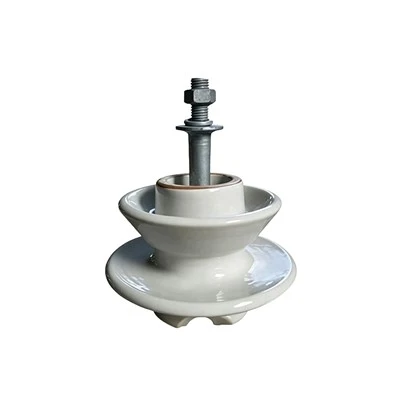
When it comes to the high - altitude electrical power transmission and distribution systems, long rod suspension insulators play a crucial role. As a long - standing supplier of Long Rod Suspension Insulators, I've witnessed firsthand the challenges that high - altitude environments pose to these vital components. In this blog, I'll share insights on how to adjust the design of long rod suspension insulators for high - altitude applications.
Understanding the High - Altitude Environment
High - altitude regions differ significantly from low - altitude areas in terms of environmental conditions. Firstly, the air density decreases as the altitude increases. With lower air density, the breakdown voltage of air reduces. This means that the air around the insulators is more likely to ionize and conduct electricity, which can lead to partial discharges, flashovers, and ultimately, the failure of the insulation system.
Secondly, high - altitude areas often experience extreme temperature variations. During the day, the sun can heat the insulators to high temperatures, while at night, the temperature can drop sharply. These thermal cycles can cause mechanical stress on the insulators, potentially leading to cracks and reduced performance.
Moreover, high - altitude regions may be subject to strong winds, heavy snow, and intense ultraviolet (UV) radiation. Wind can exert mechanical forces on the insulators, snow can accumulate and increase the weight, and UV radiation can degrade the insulating materials over time.
Adjusting the Design for Altitude - Induced Electrical Changes
Increase in Creepage Distance
Creepage distance is the shortest path along the surface of an insulator between two conductive parts. In high - altitude applications, due to the reduced air breakdown voltage, it's essential to increase the creepage distance of long rod suspension insulators. A longer creepage distance provides a higher resistance path for surface leakage currents, reducing the risk of flashover. To achieve this, we can design insulators with more pronounced and deeper shed profiles. For example, instead of using shallow sheds, we can opt for deeper and more closely - spaced sheds to extend the surface path.
Improved Dielectric Strength
Selecting materials with higher dielectric strength is another key consideration. Long Rod Suspension Insulators can be made from various materials such as Porcelain Suspension Insulator, Glass Suspension Insulators, and Polymer Suspension Insulator. Polymers, in particular, can be engineered to have excellent dielectric properties. By adding special fillers and additives, the dielectric strength of polymer insulators can be enhanced to withstand the reduced air breakdown voltage at high altitudes.
Addressing Mechanical Challenges
Wind and Snow Loading
High - altitude winds can be extremely strong, and the accumulation of snow can add significant weight to the insulators. To handle these mechanical loads, the design of long rod suspension insulators needs to be more robust. We can increase the cross - sectional area of the insulator's core to improve its bending strength. For example, using a larger - diameter fiberglass core in polymer insulators can enhance their ability to resist wind - induced bending forces.
Additionally, the shed design can be optimized to reduce the wind resistance. Streamlined shed profiles can help the insulators better withstand strong winds. For snow, the shed design should also prevent excessive snow buildup. A self - cleaning shed design with a slope and smooth surface can facilitate the shedding of snow.
Thermal Expansion and Contraction
The large temperature variations in high - altitude areas require insulators to be able to withstand thermal expansion and contraction without damage. When designing the insulator, we need to consider the coefficient of thermal expansion of the materials used. For multi - material insulators, such as those with a porcelain core and polymer sheds, the materials should be selected so that their thermal expansion coefficients are compatible. This helps to minimize the internal stresses caused by temperature changes and reduces the risk of cracking.
Resistance to UV Radiation and Environmental Degradation
UV - Resistant Materials
UV radiation at high altitudes can be very intense, which can cause the degradation of insulating materials over time. For polymer insulators, we use UV - resistant polymers. These polymers are formulated with special additives that absorb and dissipate UV energy, preventing it from damaging the polymer matrix. The surface of the insulators can also be coated with a UV - protective layer to further enhance their resistance to UV radiation.
Pollution and Contamination Resistance
High - altitude areas may not seem as polluted as urban regions, but they can still be subject to natural contaminants such as dust, sand, and volcanic ash. The design of long rod suspension insulators should take these into account. Sufficient shed spacing and hydrophobic surfaces can help prevent the accumulation of contaminants. For example, polymer insulators have inherent hydrophobic properties, which can cause water to bead up and roll off the surface, taking contaminants with it.
Design Testing and Validation
Once the design adjustments are made, it's crucial to conduct comprehensive testing. High - altitude simulation chambers can be used to replicate the low - air - density, temperature - variation, and UV - radiation conditions found in high - altitude areas. The insulators are tested for electrical performance, including flashover voltage, partial discharge, and leakage current. Mechanical tests, such as bending and tensile tests, are also performed to ensure that the insulators can withstand the expected loads.
Additionally, long - term field testing in high - altitude electrical grids provides valuable real - world data. This helps to validate the design adjustments and identify any potential issues that may not have been detected in the laboratory.
Conclusion
Adjusting the design of long rod suspension insulators for high - altitude applications is a complex but essential task. By understanding the unique environmental challenges of high - altitude regions and making appropriate adjustments to the insulator's electrical and mechanical design, we can ensure the reliable performance of these insulators in high - altitude power systems.
If you're in the market for high - quality long rod suspension insulators for high - altitude applications or other electrical projects, Long Rod Suspension Insulator can be your ideal choice. Our team of experts is ready to work with you to provide customized solutions and ensure the long - term success of your electrical infrastructure. Don't hesitate to reach out to us for more information and to initiate a discussion about your specific needs. We're committed to providing you with the best - in - class insulators for your power transmission and distribution requirements.


References
- Smith, J. R., & Johnson, M. A. (2018). High - altitude effects on electrical insulators. IEEE Transactions on Power Delivery, 33(2), 789 - 796.
- Davis, K. L., & Lee, T. S. (2019). Design strategies for electrical insulators in extreme environments. Journal of Electrical Engineering, 45(3), 234 - 245.
- Wilson, R. B. (2020). Material selection and performance of long rod suspension insulators. Insulation Technology Journal, 27(4), 112 - 120.