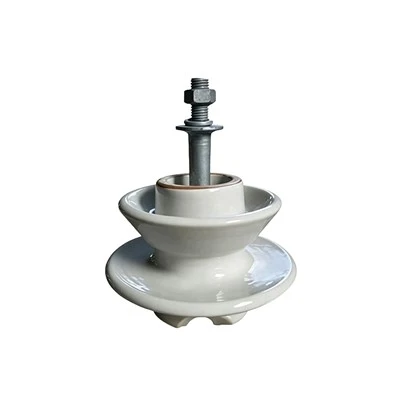
Can pigtail line post insulators be used in industrial power systems?
In the complex and demanding arena of industrial power systems, the selection of appropriate insulators is a critical decision. As a supplier of Pigtail Line Post Insulators, I am often asked whether these insulators can be effectively utilized in industrial power systems. In this blog, we will explore the characteristics, advantages, and potential applications of pigtail line post insulators in industrial settings.
Understanding Pigtail Line Post Insulators
Pigtail line post insulators are a specialized type of insulator designed to support electrical conductors in overhead power lines. They are typically installed on poles or towers and are responsible for maintaining the electrical isolation between the conductors and the supporting structure. The "pigtail" feature refers to the flexible conductor that is attached to the insulator, which allows for easy connection to the main power line.
These insulators are commonly made from materials such as porcelain, glass, or polymer. Each material has its own unique properties, such as high mechanical strength, excellent electrical insulation, and resistance to environmental factors. Porcelain insulators, for example, are known for their durability and ability to withstand high voltages, while polymer insulators are lightweight and offer better resistance to contamination.
Characteristics and Advantages for Industrial Power Systems
Electrical Insulation
One of the primary requirements for insulators in industrial power systems is high electrical insulation. Pigtail line post insulators are designed to provide reliable insulation, preventing electrical leakage and ensuring the safe and efficient operation of the power system. They can withstand high voltages and are suitable for use in both low and high-voltage industrial applications.
Mechanical Strength
Industrial power systems often operate in harsh environments, where insulators are subjected to mechanical stresses such as wind, ice, and vibration. Pigtail line post insulators are engineered to have high mechanical strength, allowing them to withstand these stresses without damage. This ensures the long-term reliability of the power system and reduces the risk of outages.
Environmental Resistance
Industrial areas can be exposed to a variety of environmental factors, including pollution, chemicals, and extreme weather conditions. Pigtail line post insulators are designed to be resistant to these factors, ensuring their performance and durability over time. For example, polymer insulators have excellent hydrophobic properties, which prevent the accumulation of moisture and contamination on the surface, reducing the risk of flashovers.
Easy Installation and Maintenance
Pigtail line post insulators are relatively easy to install and maintain, which is an important consideration in industrial power systems. Their flexible pigtail design allows for quick and easy connection to the power line, reducing installation time and costs. Additionally, they require minimal maintenance, which helps to lower the overall operating costs of the power system.
Applications in Industrial Power Systems
Distribution Networks
Pigtail line post insulators are commonly used in industrial distribution networks, where they support the electrical conductors that carry power from the substations to the end-users. They are suitable for use in both overhead and underground distribution systems and can be used in a variety of industrial applications, such as factories, mines, and refineries.
Substations
In industrial substations, pigtail line post insulators are used to support the high-voltage conductors that connect the transformers, circuit breakers, and other equipment. They play a crucial role in maintaining the electrical isolation between the conductors and the grounding system, ensuring the safe and reliable operation of the substation.
Renewable Energy Systems
With the growing adoption of renewable energy sources such as solar and wind power, pigtail line post insulators are also being used in industrial renewable energy systems. They are used to support the electrical conductors that connect the solar panels, wind turbines, and other components of the renewable energy system to the grid.


Comparison with Other Types of Post Insulators
Metal Post Insulators
Metal post insulators are typically used in high-voltage applications where high mechanical strength is required. They are made from materials such as steel or aluminum and are known for their durability and resistance to corrosion. However, metal post insulators have lower electrical insulation properties compared to pigtail line post insulators, which makes them less suitable for use in applications where electrical isolation is critical.
Rod Post Insulator
Rod post insulators are designed to provide support for electrical conductors in overhead power lines. They are typically made from porcelain or polymer and are known for their high mechanical strength and electrical insulation properties. However, rod post insulators do not have the flexible pigtail design of pigtail line post insulators, which makes them less suitable for applications where easy connection to the power line is required.
Polymer Post Insulator
Polymer post insulators are similar to pigtail line post insulators in that they are made from polymer materials and offer excellent electrical insulation and environmental resistance. However, polymer post insulators do not have the pigtail feature, which makes them less suitable for applications where easy connection to the power line is required.
Station Post Insulator
Station post insulators are used in high-voltage substations to support the electrical conductors that connect the transformers, circuit breakers, and other equipment. They are typically made from porcelain or polymer and are known for their high mechanical strength and electrical insulation properties. However, station post insulators are larger and heavier than pigtail line post insulators, which makes them less suitable for use in applications where space and weight are limited.
Conclusion
In conclusion, pigtail line post insulators can be effectively used in industrial power systems due to their high electrical insulation, mechanical strength, environmental resistance, and easy installation and maintenance. They are suitable for use in a variety of industrial applications, including distribution networks, substations, and renewable energy systems. While there are other types of post insulators available, pigtail line post insulators offer unique advantages that make them a popular choice for industrial power systems.
If you are interested in learning more about our Pigtail Line Post Insulators or other types of insulators, please do not hesitate to contact us. We would be happy to discuss your specific requirements and provide you with a customized solution.
References
- Electrical Insulation Handbook for Power Systems Engineering, McGraw-Hill Professional
- High Voltage Engineering: Fundamentals, Springer
- Power System Analysis and Design, Cengage Learning