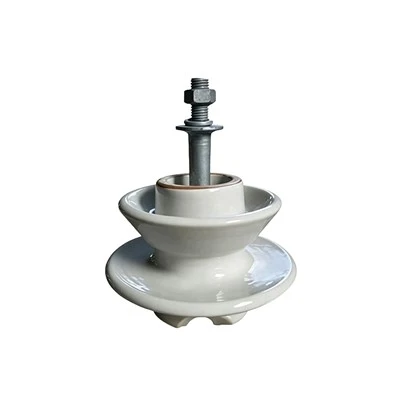
Porcelain post insulators are vital components in electrical power systems, providing support and insulation for high - voltage lines. When deployed in extreme cold environments, their performance is of great concern to both utility companies and suppliers like me. In this blog, I'll share insights into how porcelain post insulators perform in such harsh conditions.
1. Material Characteristics of Porcelain in Cold
Porcelain is a ceramic material composed mainly of kaolin, feldspar, and quartz. Its crystalline structure and composition give it several properties that are relevant to cold - weather performance.
Thermal Expansion
One of the key aspects is the coefficient of thermal expansion. Porcelain has a relatively low and stable coefficient of thermal expansion. In extreme cold, as the temperature drops significantly, most materials contract. The low thermal expansion of porcelain means that the dimensional changes are minimal. This is crucial because large dimensional changes can lead to mechanical stress within the insulator. For example, if an insulator expands or contracts too much, it may cause cracking or breakage, especially at the interfaces where it is attached to the electrical structure.
Brittleness
Porcelain is a brittle material. In cold temperatures, the brittleness can become more of a concern. The cold can reduce the material's ability to deform plastically. A small impact or mechanical stress that the porcelain might tolerate in normal temperatures could potentially cause it to fracture in extreme cold. However, modern porcelain post insulator manufacturing techniques have improved the material's toughness to some extent, making it more resistant to such failures.
2. Electrical Performance in Extreme Cold
The electrical performance of porcelain post insulators is directly related to the reliability of the power grid.


Dielectric Strength
The dielectric strength of porcelain is relatively stable across a wide temperature range, including extreme cold. Dielectric strength is the ability of a material to withstand an electric field without breaking down. In cold conditions, the molecular motion in the porcelain slows down, and the dielectric properties are not significantly affected. This ensures that the insulator can continue to provide reliable insulation, preventing electrical discharges between conductors and the grounded structure.
Surface Resistance
Surface resistance is another important factor. In cold and dry conditions, the surface of the porcelain post insulator tends to have a higher resistance. This is beneficial as it reduces the leakage current. Leakage current can cause power losses and, in severe cases, lead to insulator overheating and failure. However, if there is moisture present on the surface, such as in the form of frost or ice, the surface resistance can decrease significantly. The water in frost or ice can create conductive paths, increasing the leakage current and potentially leading to flashovers.
3. Mechanical Performance in Extreme Cold
Porcelain post insulators are subject to various mechanical stresses in the power system, and these stresses are amplified in extreme cold.
Wind and Ice Loading
In cold regions, ice accretion on the insulator is a common problem. The weight of the ice adds an extra mechanical load to the insulator. Additionally, strong winds in cold weather can further exacerbate the stress. Porcelain post insulators need to be designed to withstand these increased mechanical forces. Adequate strength and proper design of the insulator shape can help distribute the load evenly. For example, using aerodynamic shapes can reduce the wind - induced stress and prevent the concentration of forces at specific points on the insulator.
Mounting and Connections
The mounting and connection points of the porcelain post insulator are also critical in extreme cold. The materials used for mounting and connections need to have similar thermal expansion coefficients to the porcelain to avoid differential expansion or contraction. This prevents loosening or tightening of connections, which could lead to poor electrical contact or mechanical instability.
4. Our Solutions for Extreme Cold Environments
As a porcelain post insulator supplier, we have developed several solutions to ensure the optimal performance of our products in extreme cold.
Advanced Manufacturing Processes
We use advanced manufacturing techniques to improve the quality and consistency of our porcelain post insulators. For example, we carefully control the firing process to achieve a more homogeneous ceramic structure. This enhances the mechanical and electrical properties of the insulators, making them more resistant to the effects of extreme cold.
Special Coatings
We apply special coatings to the surface of our insulators. These coatings can improve the hydrophobicity of the porcelain surface, reducing the likelihood of moisture accumulation. By preventing the formation of frost or ice on the surface, we can maintain the high surface resistance and reduce the risk of flashovers.
5. Types of Porcelain Post Insulators for Extreme Cold
There are different types of porcelain post insulators that can be used in extreme cold environments, each with its own advantages.
Corner Post Insulators
Corner post insulators are designed for use at corners or angles in the power grid. Their shape and structure are optimized to handle the unique mechanical stresses at these locations. In extreme cold, their robust design helps them withstand ice and wind loads while maintaining their electrical insulation properties.
Line Post Type Insulator
Line post type insulators are used to support overhead power lines. They are typically installed vertically along the line. Our line post type insulators are engineered to have high mechanical strength and excellent electrical performance in cold weather. The design minimizes the impact of ice and wind on the insulator's stability.
Rod Post Insulator
Rod post insulators are a popular choice for their simplicity and compactness. In extreme cold, their solid rod structure provides good mechanical support. The porcelain material is carefully selected to ensure that it can withstand the low - temperature conditions without significant degradation of its properties.
Glass Line Post Insulator
Glass line post insulators often have better resistance to environmental contamination compared to porcelain. In cold environments, the smooth glass surface is less likely to accumulate ice and dirt. This helps maintain their electrical performance and reduces the risk of flashovers.
Steel Post Insulators
Steel post insulators can be a practical option in some extreme cold applications. The steel provides high mechanical strength, and it can be combined with porcelain insulation to achieve a good balance between mechanical and electrical performance.
6. Contact for Purchase and Consultation
If you are in need of high - quality porcelain post insulators for extreme cold environments, I'm here to assist you. Whether you are a utility company planning a new power project in a cold region or an electrical contractor looking for reliable insulation solutions, I can offer you a wide range of options. We can discuss the specific requirements of your project, and I'll provide you with detailed product information and technical support. Don't hesitate to reach out for a purchasing consultation to ensure a seamless and efficient acquisition of the right porcelain post insulators for your needs.
References
- Grover, I. K., & Gupta, S. C. (2004). Power System Engineering. New Age International.
- Westinghouse Electric Corporation (1964). Electrical Transmission and Distribution Reference Book.
- IEEE Std 214-1977 (Reaff 1983). IEEE Standard Test Procedure for Porcelain Insulators.